
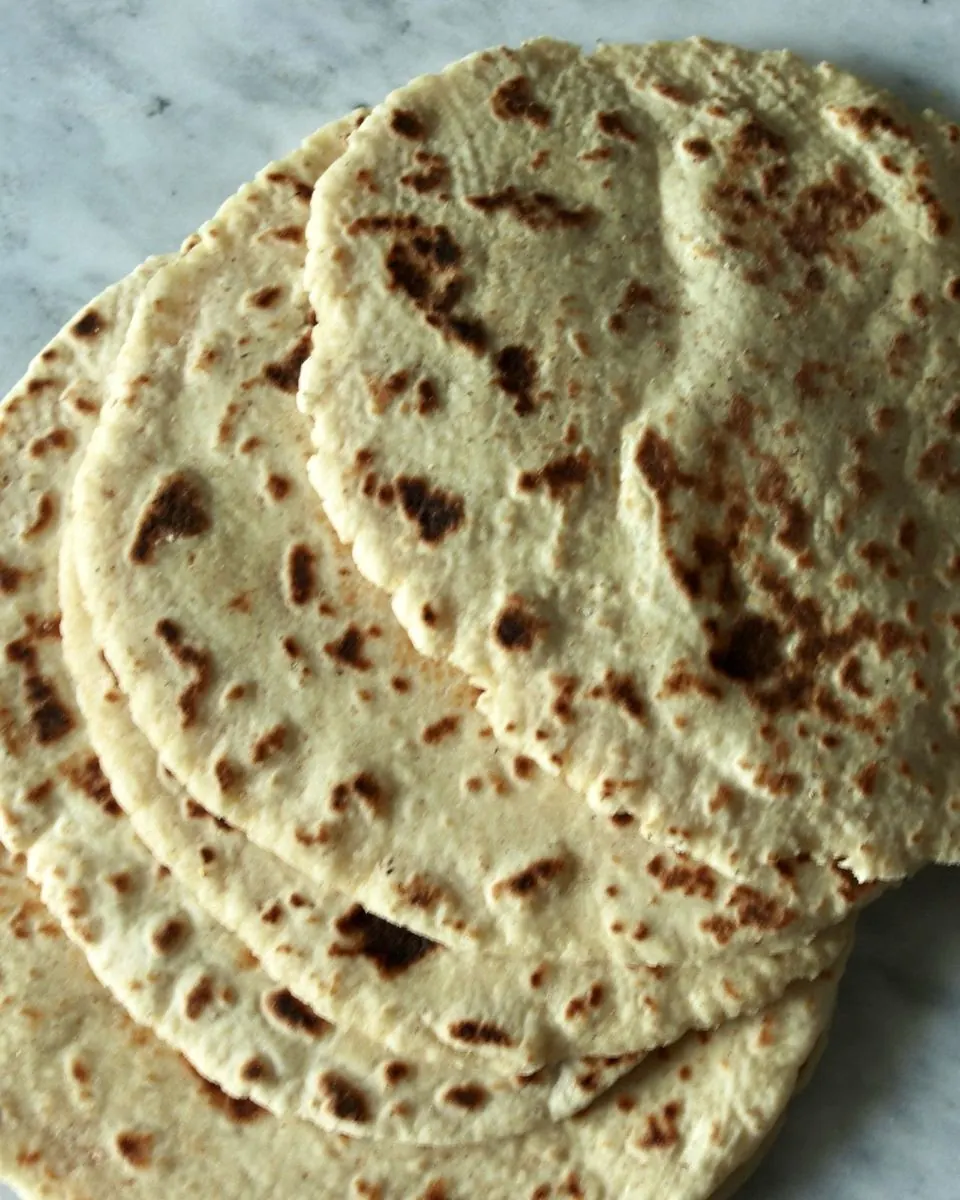
Authentic Homemade Naan Recipe
Learn how to make soft, fluffy homemade naan using simple ingredients.
- Family recipe
- Vegetarian
- Step-by-step recipe
- Classroom tested
From My Kitchen
Come into the kitchen with me — there's something special about pulling warm naan straight from the pan.
I know naan has a reputation for being tricky, but once you understand the dough and give it enough time to rise, it's genuinely straightforward.
This is the recipe I use myself. It's simple, reliable, and works whether you're serving it with curry, turning it into a quick pizza or filling it for lunch.
Before You Start
This is rated medium difficulty, and involves 20 min, ~2 hours, 30–45 min, 3 min. None of it is complicated — just a little patience where the recipe needs it.
What you'll learn
- • How to make a soft, workable yeasted dough by hand
- • Why resting and rising times matter for texture
- • How to shape and roll naan evenly
- • How to cook naan on a hot pan until it bubbles and chars
Step-by-step
- 1
Mix the dry ingredients
Mix together the flour, salt and instant yeast.
[PHOTO – Ingredients] - 2
Form the dough
Add the yoghurt, vegetable oil and five tablespoons of the lukewarm milk. Mix together until a dough starts to form, adding the remaining milk only if needed. The dough should feel soft but not sticky.
[PHOTO – Mixing Dough] - 3
Knead until smooth
Knead the dough for around 8–10 minutes until it becomes smooth, elastic and springs back gently when pressed with your finger.
[PHOTO – Kneading] - 4
First rise
Place the dough into a lightly oiled bowl. Cover with a tea towel and leave somewhere warm until doubled in size — this usually takes around two hours.
[PHOTO – First Rise] - 5
Second rise
Knock the air out of the dough gently, then leave it to rise again for around 30–45 minutes. This second rise creates a lighter, softer naan.
- 6
Divide and shape
Lightly grease your hands and divide the dough into 6 equal portions. Shape each piece into a smooth ball, covering the dough balls while you finish shaping them so they don't dry out.
[PHOTO – Dividing Dough] - 7
Roll into ovals
Lightly flour your work surface and roll each dough ball into an oval approximately 8–9 inches long. Don't worry if every naan isn't identical — handmade naan should look handmade.
[PHOTO – Rolling] - 8
Cook and serve
Heat a heavy frying pan until very hot. Place one naan into the dry pan; once bubbles begin appearing, flip and continue cooking until both sides develop golden brown spots. Brush lightly with butter or ghee if desired, and serve immediately.
[PHOTO – Cooking][PHOTO – Finished Naan]
Ready to start cooking? Here's the complete recipe, with everything you need in one place.
Recipe Card
Authentic Homemade Naan Recipe
Soft, fluffy homemade naan using simple ingredients.
Ingredients
Tap an ingredient as you go
For the dough
You'll need
- ✓ Large mixing bowl
- ✓ Rolling pin
- ✓ Tea towel
- ✓ Heavy frying pan or cast iron pan
- ✓ Pastry brush
Method
- 1. Mix together the flour, salt and instant yeast.
- 2. Add the yoghurt, vegetable oil and five tablespoons of the lukewarm milk. Mix together until a dough starts to form, adding the remaining milk only if needed. The dough should feel soft but not sticky.
- 3. Knead the dough for around 8–10 minutes until it becomes smooth, elastic and springs back gently when pressed with your finger.
- 4. Place the dough into a lightly oiled bowl. Cover with a tea towel and leave somewhere warm until doubled in size — this usually takes around two hours.
- 5. Knock the air out of the dough gently, then leave it to rise again for around 30–45 minutes. This second rise creates a lighter, softer naan.
- 6. Lightly grease your hands and divide the dough into 6 equal portions. Shape each piece into a smooth ball, covering the dough balls while you finish shaping them so they don't dry out.
- 7. Lightly flour your work surface and roll each dough ball into an oval approximately 8–9 inches long. Don't worry if every naan isn't identical — handmade naan should look handmade.
- 8. Heat a heavy frying pan until very hot. Place one naan into the dry pan; once bubbles begin appearing, flip and continue cooking until both sides develop golden brown spots. Brush lightly with butter or ghee if desired, and serve immediately.
💛 Mumbai Mix Tips
- • Don't add all the milk at once. Different flours absorb different amounts of liquid.
- • The dough should feel soft, not wet. A sticky dough is much harder to roll.
- • The second rise is worth the wait. Many people skip it, but it gives a much lighter naan.
- • A properly heated pan makes all the difference. If the pan isn't hot enough, the naan will dry out before it colours.
Common Naan Mistakes
Why didn't my naan rise?
Usually the yeast was old or the dough wasn't kept somewhere warm enough.
Why is my naan dry?
The dough was probably too dry to begin with or it was cooked too slowly.
Why doesn't my naan bubble?
Your pan probably wasn't hot enough.
FAQs
Can I make naan without a tandoor or naan oven?
Yes — a hot, heavy frying pan or cast iron pan gives excellent results at home. Traditional tandoor ovens reach much higher temperatures, but a well-heated pan with a lid still produces soft, properly bubbled naan.
Why is my naan dense instead of soft and airy?
This is almost always under-proving. If the dough hasn't roughly doubled in size before shaping, it won't have the air structure needed for a light naan. A warm, draught-free spot and enough time matter more than the exact recipe.
Can I make the dough the night before?
Yes — after the first rise, knock the dough back, cover it tightly and refrigerate overnight. Let it come back to room temperature for about 30 minutes before shaping and cooking.
Is yeast necessary, or can I use a yeast-free method?
Traditional naan does use yeast for its characteristic rise and bubbled texture. A yeast-free version is possible using yoghurt and baking powder instead, but the result is closer to a flatbread than classic naan.
What's the difference between this naan and the wholemeal version?
This recipe uses plain white flour for a lighter, softer result closer to what you'd get at a restaurant. The wholemeal version swaps in chapati flour for a heartier, slightly nuttier bread.
Try the Wholemeal Naan recipe →Can naan be frozen after cooking?
Yes — cool completely, then wrap individually and freeze. Reheat from frozen in a dry pan or under the grill for a couple of minutes per side rather than in the microwave, which makes it chewy rather than soft.
Variations
Different ways to make this your own
- Garlic Naan
- Cheese Naan
- Chilli Naan
- Wholemeal Naan
- Mini Naan Pizzas
Continue Learning
This recipe is the foundation for:
- Naan Pizza (Coming Soon)
- Naan Wraps (Coming Soon)
- Paneer Butter Masala (Coming Soon)
- Butter Chickpeas (Coming Soon)
- Restaurant Curry Sauce (Coming Soon)
From the Mumbai Mix Kitchen
One thing we always remind our students is that naan doesn't need to look perfect.
Some will be round. Some will be oval. Some will bubble more than others. That's exactly how homemade naan should be.
Don't aim for identical. Aim for soft, fluffy and full of flavour.
Happy cooking,
— Deshna